
The AI-Data Convergence: What the SAP-Reltio Acquisition Means
The AI-Data Convergence: What the SAP-Reltio Acquisition Means for the 2027 Intelligent Enterprise.
On March 27, 2026, the strategic landscape for enterprise data changed. SAP’s announced intent to acquire Reltio, a cloud-native, AI-first Master Data Management (MDM), is an interesting diversion for SAP. It is a fundamental admission by the world’s ERP leader that the future of the "Intelligent Enterprise" cannot be built on SAP-native data alone.
As organizations grapple with the transition to Agentic AI and the relentless pressure of S/4HANA migrations, this acquisition provides a potential answer to the industry’s biggest hurdle: fragmented context. But it also throws up more questions. What does this mean for SAP MDG? What about cloud MDG solutions in the SAP space like SimpleMDG?
Let’s dive into the details.
For decades, SAP has been the unrivalled master of the "Inside." If it happened in finance, sales, procurement, manufacturing, within the four walls of the ERP, SAP governed it with absolute precision. However, as the world moved toward a best-of-breed SaaS landscape, a "siloed core" paradox emerged: SAP was excellent at managing SAP data, but struggled to govern the heterogeneous data living in SalesForce, Shopify, Snowflake, and other ancillary systems.
According to recent Gartner analysis, a primary failure of Data & Analytics leaders is conflating Data Governance (the business-led capability of defining policy) with Data Management (the technical execution).
The Reltio acquisition, in some ways, allows SAP to operationalize this distinction:
- Existing cloud MDG solutions aligned to SAP BTP, such as SimpleMDG, remain the strategic executioner for SAP-native applications. These types of solutions are deeply embedded in the ERP business rules and are the guardians of core SAP S/4HANA data.
- Reltio becomes the enterprise governance hub in the sense that it can handle non-SAP data. It is designed for the heterogeneous landscape, pulling in data from non-SAP environments to create a unified, vendor-agnostic system of record.
So, what are the implications of this? IT leaders no longer have to force-fit SAP-native logic onto non-SAP data. By 2027, it is likely that the standard architecture will involve aligning existing solutions like SimpleMDG and SAP MDG to the ERP core while using Reltio to drive MDM across the broader digital landscape.
What about Artificial Intelligence, I hear you cry! As we all know, the catchy phrase for 2026 is Agentic AI: autonomous agents that don't just chat but actually execute. What the industry has been slower to pick up on is the essential requirement for a solid system of context for these agents to function without human intervention.
Reltio’s primary technical value-add is its Intelligent Data Graph and Entity Resolution capabilities. Unlike traditional relational databases, Reltio’s solution is set up to understand the complex, non-linear relationships between people, products, and places. By acquiring Reltio, SAP is injecting this relationship intelligence directly into its Business Data Cloud (BDC). This accelerates SAP’s ability to deliver context-rich data to its Joule agents.
It is likely that the Intelligent Data Graph is the key reason for SAP’s acquisition of Reltio.
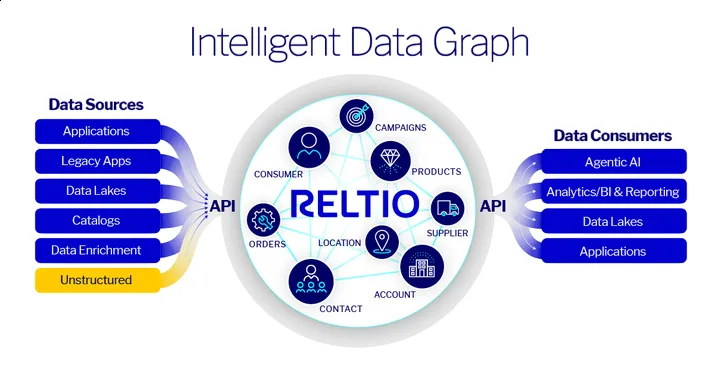
In this new Reltio-SAP world, the concept of the "Clean Core" moves from a technical aspiration to a governed reality. However, a major question for many customers is: How do we bridge the gap between Reltio’s high-level enterprise hub and the granular, technical tables of S/4HANA?
This is where the synergy with an SAP native solution like SAP MDG or SimpleMDG becomes essential.
- Reltio defines the global business policy.
- SAP MDG or SimpleMDG acts as the execution agent, ensuring that those global policies are translated and enforced within the high-complexity environment of S/4HANA (managing MARA, MARC, and other SAP-specific technical requirements).
This three-tier architecture, comprising Reltio (global hub), SAP MDG or SimpleMDG (SAP translator), and SAP S/4HANA (the core), is an essential way for a modern enterprise to scale its data operations without hiring an army of manual data stewards.
Commercially, there are several impacts here too. While the strategic value of the deal is clear, Gartner highlights several risks that CIOs must manage during the integration period, which is expected to close in Q2/Q3 of 2026.
Firstly, there is a fundamental difference in how the MDG platforms are billed:
- SAP MDG: Solely usage-based.
- SimpleMDG: based on the number of master data types.
- Reltio: A hybrid of subscription and usage.
The warning here is clear: as SAP integrates Reltio into its commercial model, Total Cost of Ownership (TCO) estimates may fluctuate. Organizations should seek early-adopter pricing for the three-tier model now to lock in favourable rates before the commercial bundling, which SAP is notorious for, becomes a reality.
An additional concern is that there is a visible overlap between Reltio’s Integration Hub (RIH) and SAP’s Business Technology Platform (BTP). Both are designed to move and transform data. Long-term, SAP will need to provide clarity on which engine will drive the integration-as-a-service layer. The smart money is on BTP, but for now, the recommendation is to use RIH for heterogeneous integrations and BTP for core SAP-to-SAP logic.
From a roadmap perspective, SAP has promised to keep Reltio as a stand-alone offering with a flexible commercial model. This is an opportunity for organisations to address their approach to master data governance in advance of any strategic moves by SAP regarding Reltio.
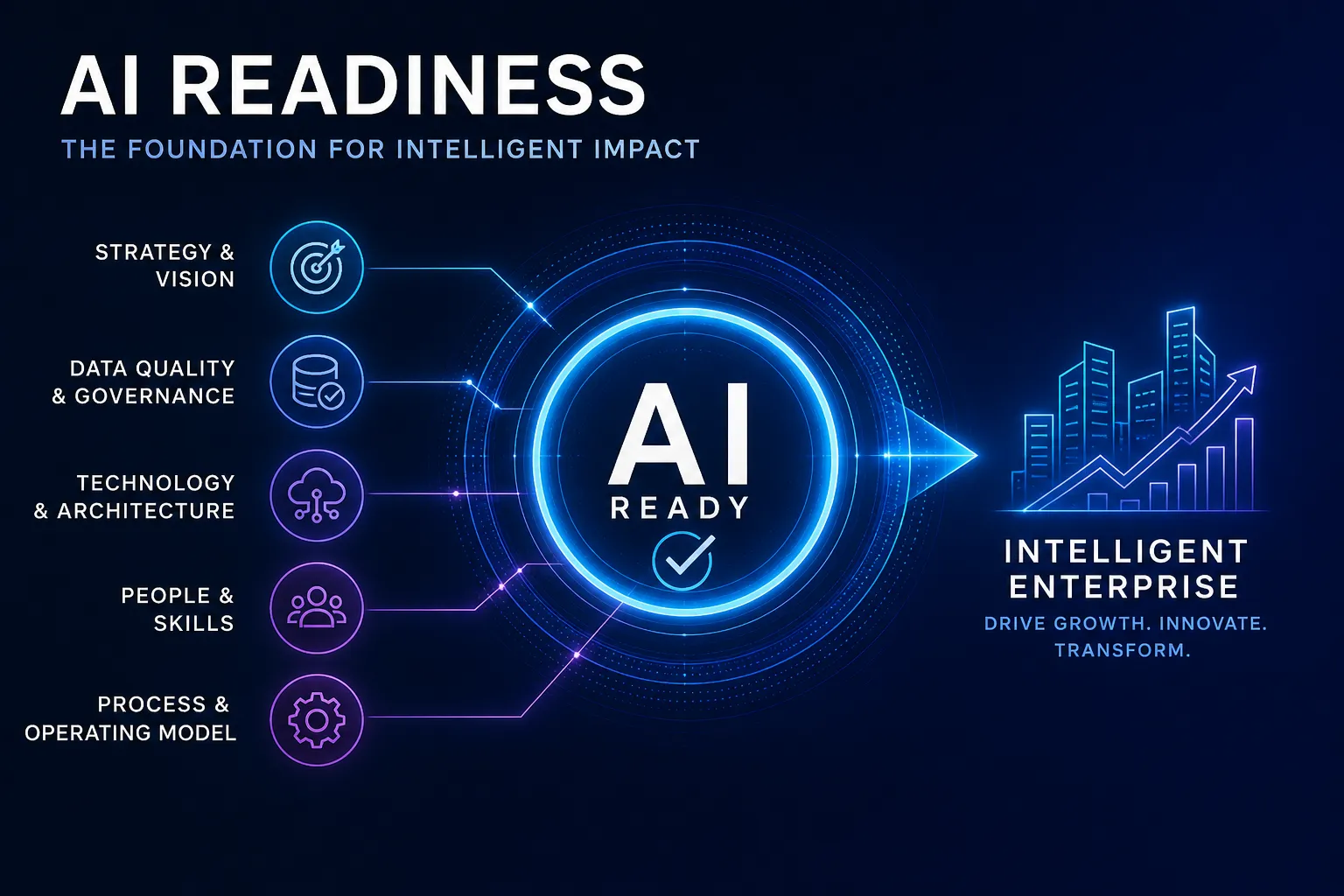
Firstly, organisations should audit their AI readiness. If organisations have failed to address the cultural challenges of data governance, Gartner predicts a 60% chance that your AI initiatives will fail. Shift the ownership of data quality from the IT department to the business stakeholders who actually use the data to drive revenue.
Secondly, organisations should embrace the composable IT landscape. Stop trying to make SAP the centre of the data universe for non-SAP applications. Immediately evaluate Reltio for your non-SAP-native environments (Salesforce, Snowflake, etc.), whilst leveraging SAP MDG or SimpleMDG to master your clean SAP-native data.
While the acquisition may end up being a win for SAP users, it is important to monitor SAP’s commitment to Reltio’s independent interoperability. Remember the composable landscape trend: the goal is to avoid becoming so tightly coupled to the SAP Business Suite that you lose the ability to integrate with the great SaaS and AI innovations.
Conclusion
The SAP-Reltio acquisition marks yet another step in the ongoing journey from ERP as a "system of record" to ERP as a “system of context”. In future years, the most successful companies won't be the ones with the most data; rather they will be the ones with the most governed data. By combining the three-tier architecture of existing SAP native data governance solutions such as SAP MDG or SimpleMDG, with Reltio’s ERP agnostic cloud native agility, with SAP’s enterprise-scale rigour in the shape of SAP S/4HANA, organisations finally have the tools to build a true clean core, that isn't just a database. The clean core of the future can be an autonomous engine for growth.
More Blogs


